Best Apartment Backup Batteries for Fridge, Wi-Fi, and Work-From-Home Outages
Apartment backup is an outlet-level problem, not miniature whole-home backup. The right battery must handle refrigerator startup, keep internet gear online, fit safely indoors, and work without breaker-panel changes that a renter may not be allowed to make.
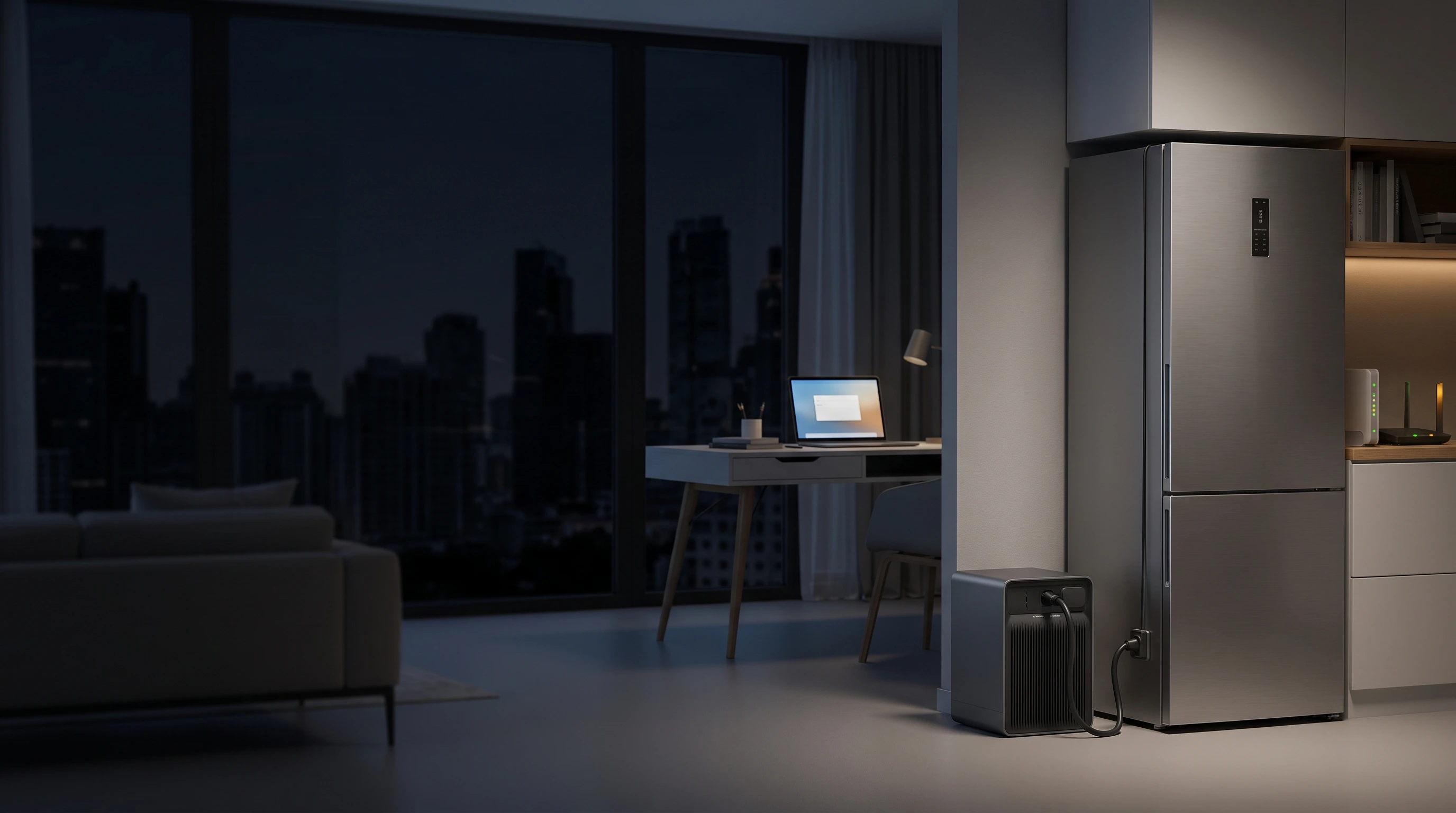
The best apartment backup battery is not the largest system that will fit through the door. For most renters and condo residents, the real job is keeping a refrigerator, modem and router, laptop setup, a few lights, and phones running without modifying the electrical panel.
That makes four details especially important: usable battery capacity, refrigerator startup support, automatic switchover for internet equipment, and a form factor you can live with. A 240V outlet or enormous expansion ceiling has little value if your lease, building rules, or floor plan prevents you from using it.
Sizing
Size your home backup
Enter your refrigerator, modem, router, computer, monitor, and lighting loads in the GridMatch sizing wizard. Size the battery from daily energy use and required runtime—not inverter wattage alone.
Free · No signup · Days, not hours
Quick recommendations
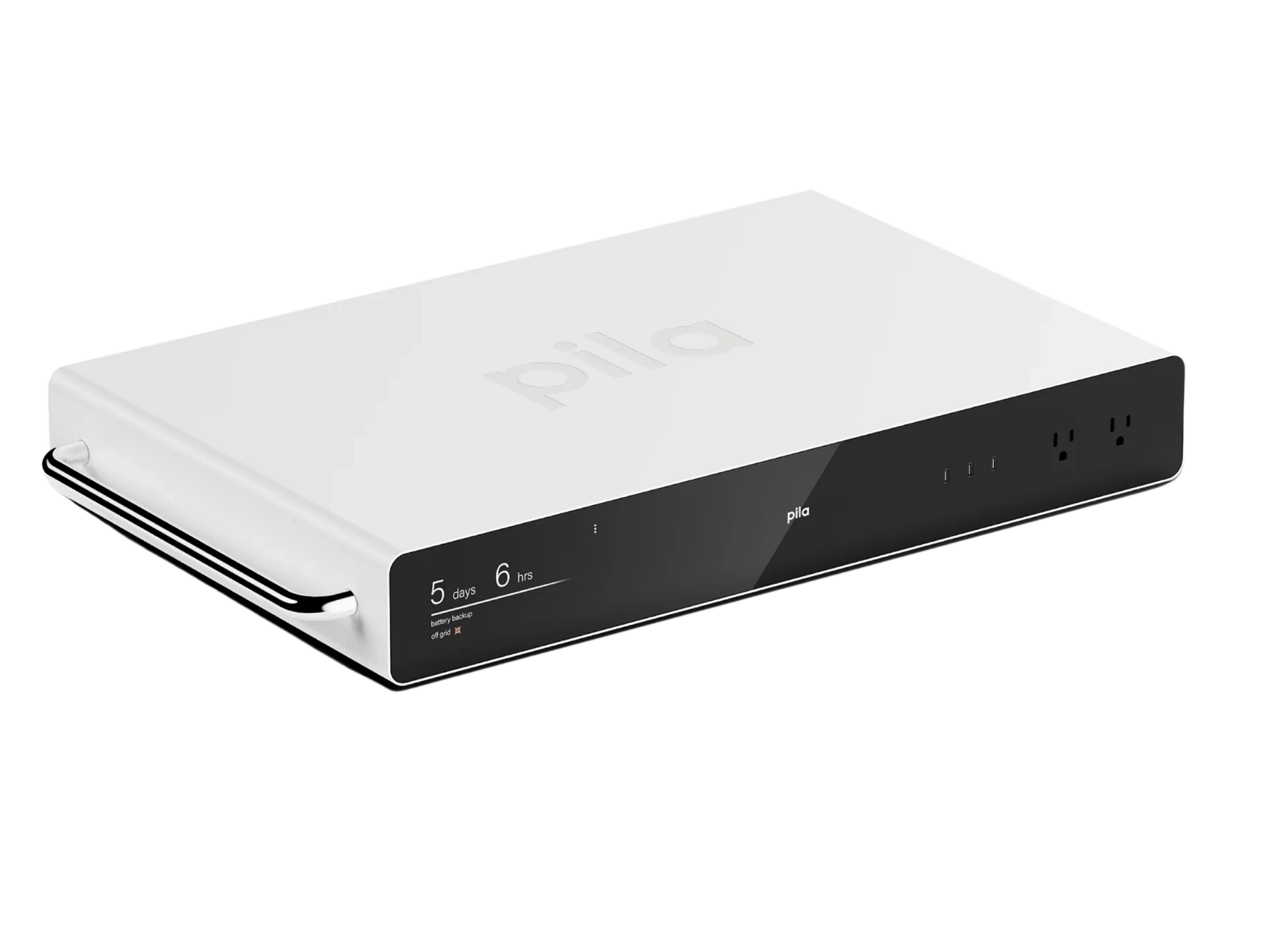
- Best overall apartment backup: Pila Mesh Home Battery — a 1.6kWh plug-in unit with four controlled AC outlets, strong refrigerator-starting headroom, and a room-by-room mesh design.
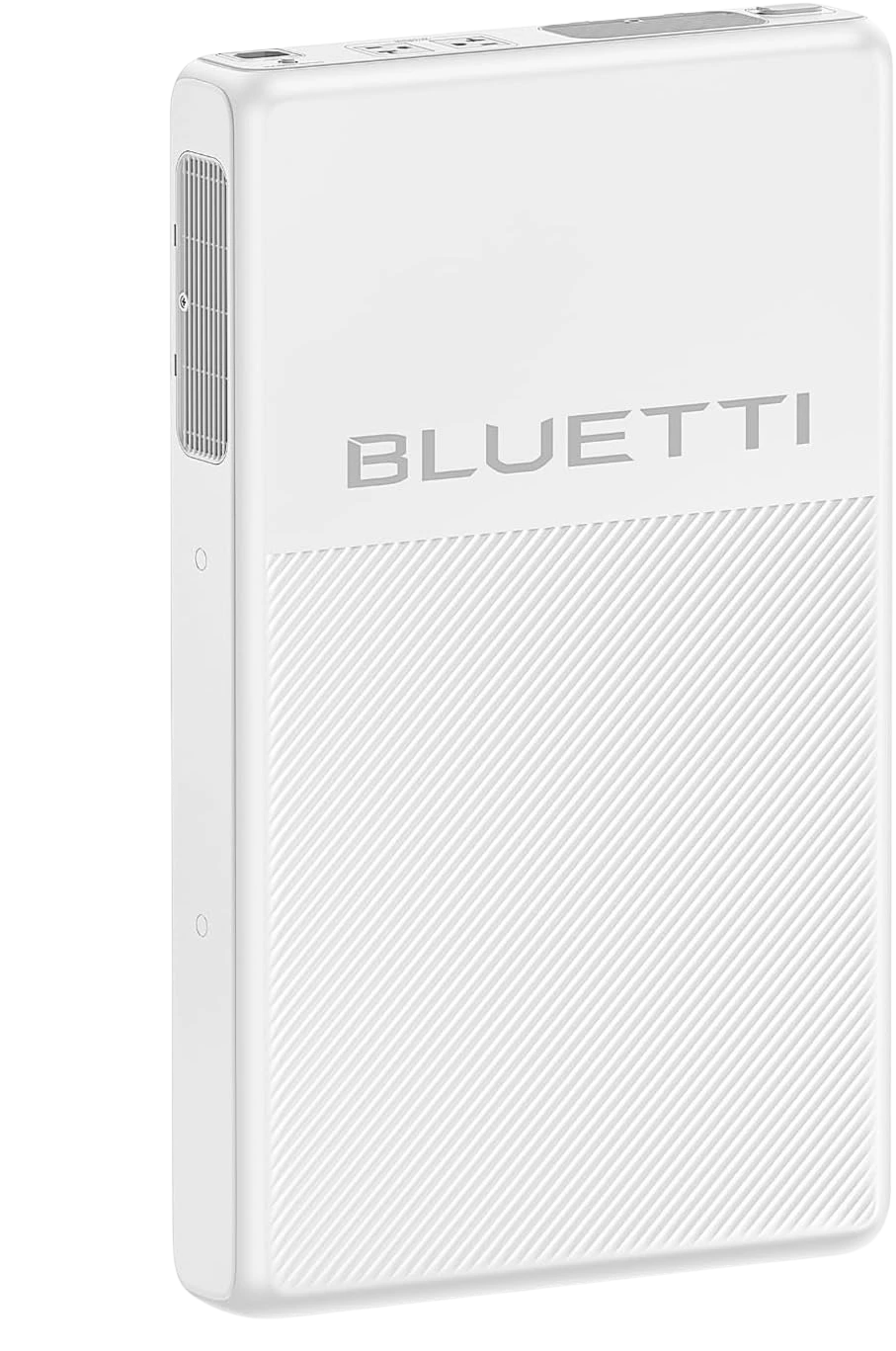
- Best fridge-first battery: BLUETTI FridgePower — a slim 2.016kWh system built around refrigerator backup, with 1800W output, 3600W surge, and sub-10 ms transfer.
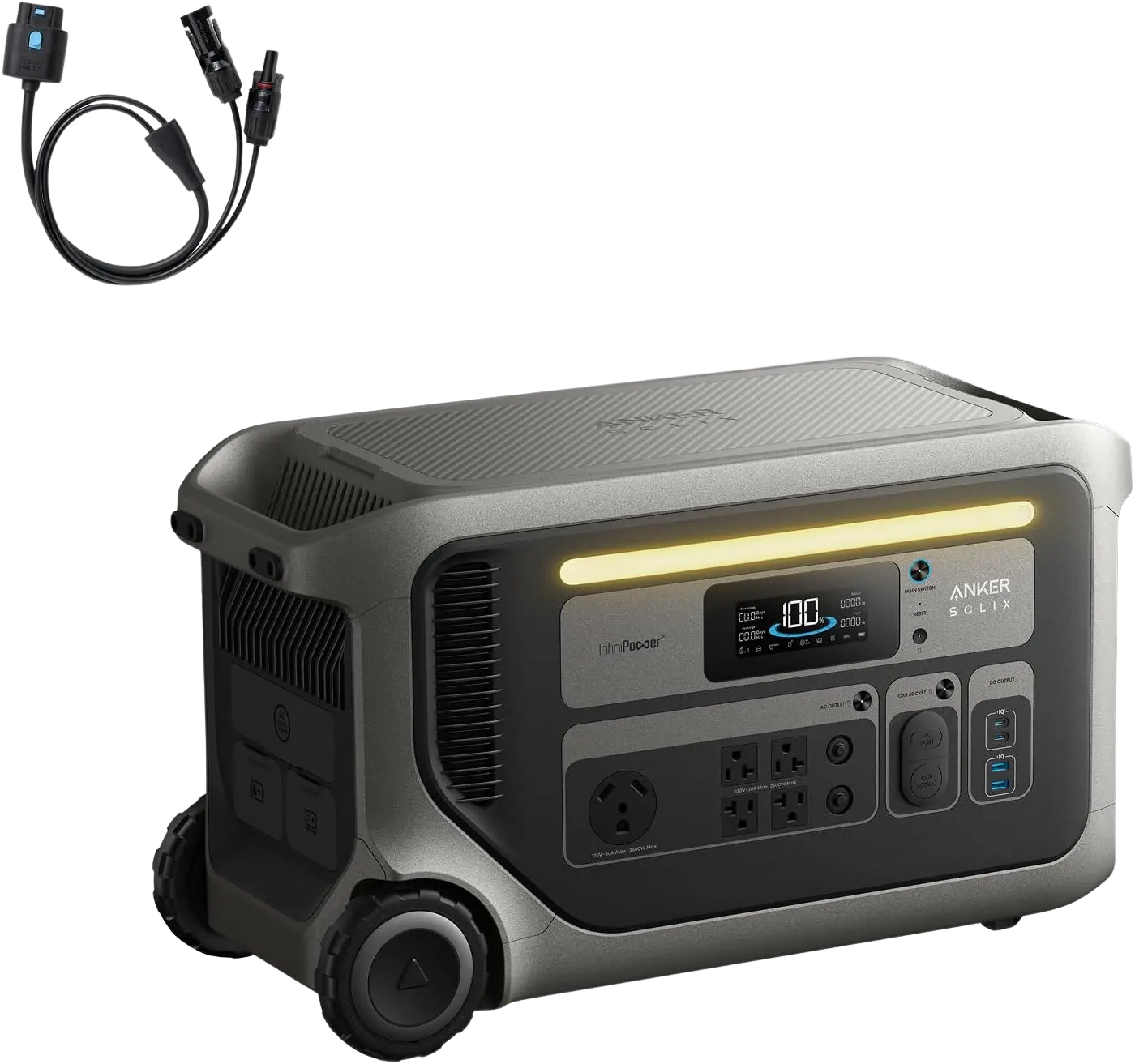
- Best large 120V station: Anker SOLIX F3000 — 3.072kWh, 3600W continuous output, wheels, and expansion to 12.288kWh without paying primarily for single-unit 240V capability.
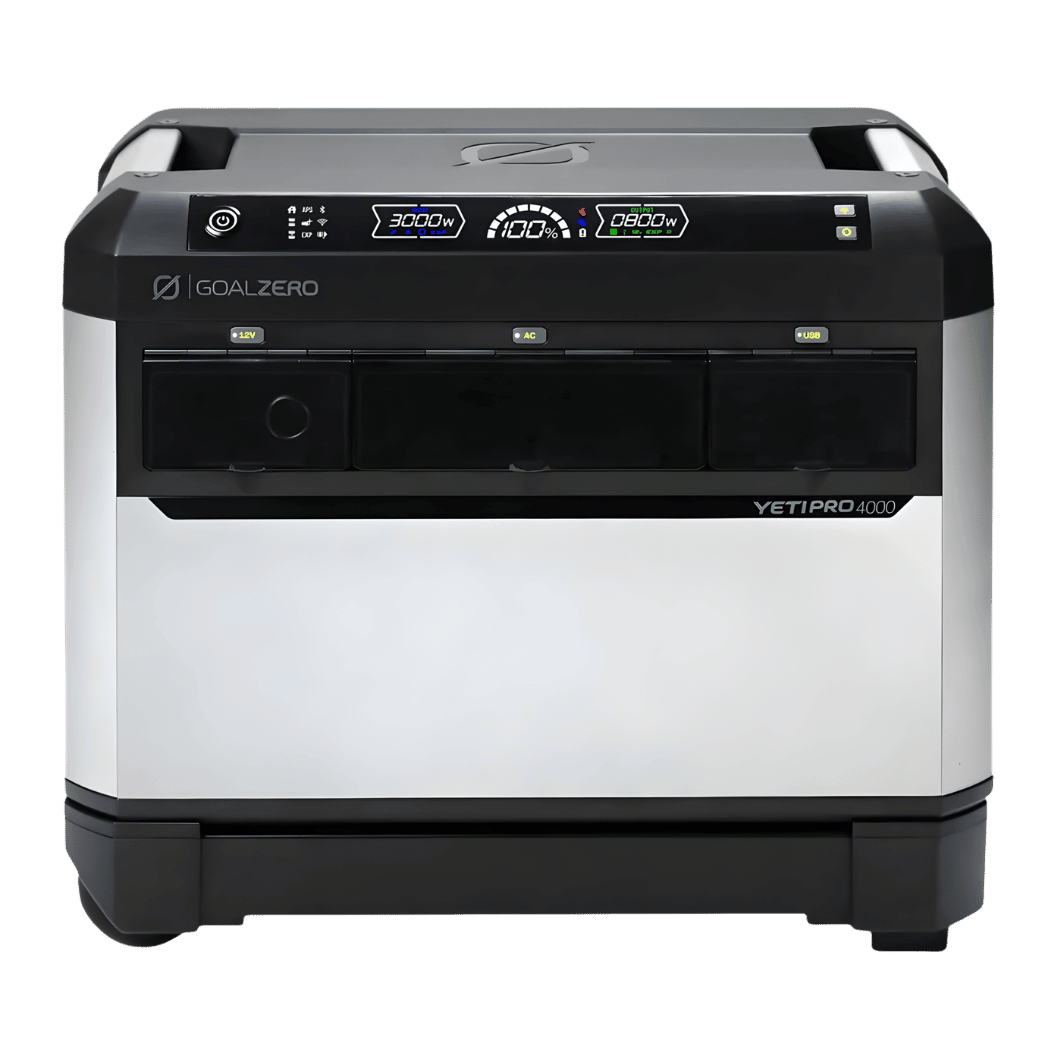
- Best long-runtime 120V cart: Goal Zero Yeti PRO 4000 — nearly 4kWh in the base unit, 3600W output, and expansion to roughly 20kWh, but it requires serious floor space.
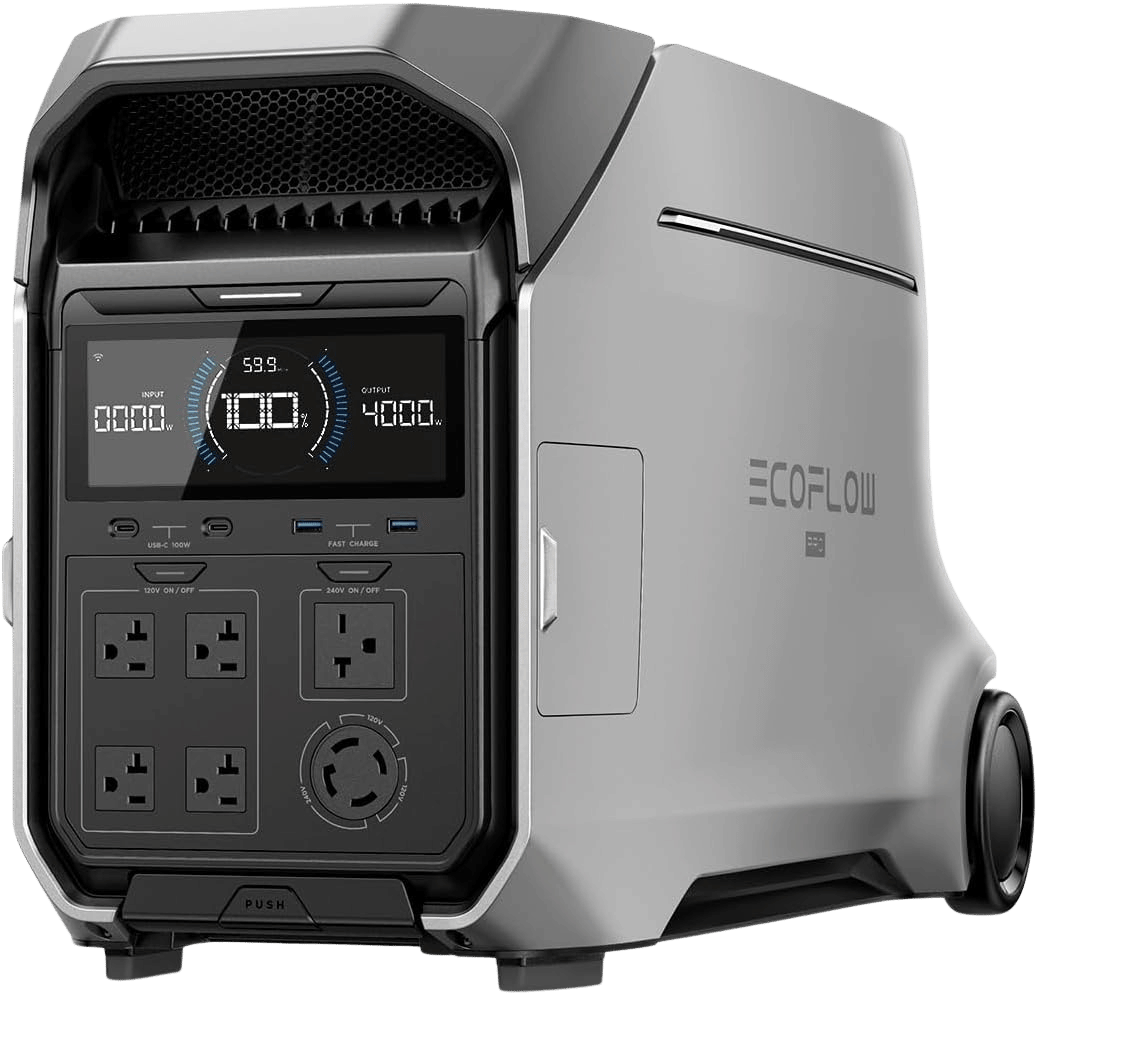
- Best future-home upgrade: EcoFlow DELTA Pro 3 — 4.096kWh with 4000W output, 10 ms UPS behavior, and native 120V/240V support for a later code-compliant home installation.
Comparison at a glance
Use this table for the fast spec scan. For apartment backup, usable capacity, continuous and surge output, and UPS transfer speed matter most — weight and expansion decide whether the unit actually fits your rental.
Prices are approximate.
Some links may be affiliate links. GridMatch may earn a commission if you buy through them, at no extra cost to you.
Usable AC energy is often estimated at about 85% of nameplate capacity. Actual efficiency changes with load, inverter mode, temperature, battery state, and product settings.
What those capacities mean in an outage
For a simple comparison, assume your refrigerator, network equipment, laptop use, and lighting average 100W together across the outage. That does not mean they draw exactly 100W every moment: the refrigerator cycles and the laptop load changes. It is an energy-planning average.
Chart
Chart unavailable
| Battery | Estimated runtime at a 100W average load |
|---|---|
| Pila Mesh Home Battery | About 13.6 hours |
| BLUETTI FridgePower | About 17.1 hours |
| Anker SOLIX F3000 | About 26.1 hours |
| Goal Zero Yeti PRO 4000 | About 33.9 hours |
| EcoFlow DELTA Pro 3 | About 34.8 hours |
These are comparison estimates, not product guarantees. Your refrigerator may consume far more or less than the example, especially during hot weather, frequent door openings, a defrost cycle, or recovery after power has already been off. Measure its energy use over at least 24 hours when possible.
The best apartment backup batteries
Pila Mesh Home Battery — best overall
The Pila Mesh Home Battery fits the apartment problem better than a traditional whole-home battery. It plugs into a standard 120V outlet and provides four individually controlled 120V outlets, two 65W USB-C ports, and one 100W USB-C port. No transfer switch is required when you connect appliances directly to it.
Its 1.6kWh capacity is modest, but the output design is unusually strong for the size: 2400W continuous, 3600W for up to 30 seconds, and a published 65A RMS startup capability. That makes it a good match for a refrigerator plus internet and office electronics without buying a 100 lb cart.
Pila's mesh system is best understood as distributed backup. Each unit protects the devices in its room, while as many as 64 units can coordinate through the local mesh. An upcoming expansion pack is listed to double one unit to 3.2kWh. That is more practical than treating the mesh as one enormous apartment battery: power still reaches the devices connected to each node.
The compromises are capacity and placement. One 1.6kWh unit is a bridge through a shorter outage, not automatic multi-day coverage for a busy apartment. At 49 lb without wheels, it also deserves a permanent location rather than regular room-to-room movement. Pila lists 10–20 ms automatic transfer, so test sensitive networking or desktop equipment before relying on seamless operation.
Pila Mesh Home Battery
1.6 kWh plug-in LFP mesh backup, 2400 W, ~10–20 ms UPS — apartment / essentials.
BLUETTI FridgePower — best fridge-first battery
BLUETTI FridgePower is the most purpose-built refrigerator battery in this group. Its 75 mm slim body can sit flat, mount vertically, or fit into a narrow space, while its 2.016kWh battery provides more base capacity than Pila.
The electrical limits suit a fridge-first setup: 1800W continuous output, 3600W surge, and automatic transfer in under 10 ms. BLUETTI also publishes a low 4W inverter idle draw, which matters when a battery spends hours waiting for a refrigerator compressor to cycle.
Capacity expands to 8.064kWh with three BlueCell 200 batteries, but the 1800W output ceiling does not increase. Expansion adds runtime, not permission to run a microwave, kettle, space heater, and refrigerator at once. Keep high-draw cooking and heating appliances outside the outage plan.
The slim design still requires planning. Wall mounting may need landlord approval, and any installation must preserve the manufacturer's required clearance and airflow. If you do not want to drill, use one of the supported horizontal placements and secure the unit against tipping or impact as instructed.
Bluetti FridgePower
3 configurations
2.02–8.06 kWh ultra-slim LFP, 1800 W, ~10 ms UPS — fridge/apartment backup.
Anker SOLIX F3000 — best large 120V station
The Anker SOLIX F3000 is the practical step up when 1.6–2kWh will not cover your workday. Its 3.072kWh LFP battery provides roughly 2.61kWh of estimated usable AC energy under the same 85% planning assumption.
Anker rates the F3000 for 3600W continuous and 7200W surge output. That gives substantial margin when the refrigerator starts while a computer, monitor, router, and other small loads are already running. Its wheels and telescoping handle also make the 91.5 lb unit more manageable than its weight suggests.
One F3000 is a 120V station. Producing 240V requires two F3000 units and Anker's Double Voltage Hub, a configuration that is unnecessary for most apartment essentials. The base station can instead expand to 12.288kWh with three BP3000 batteries.
The 20 ms UPS transfer is adequate for many modems and routers but is less reassuring for sensitive desktop computers than the 10 ms systems here. Test your exact equipment. If a reboot would interrupt critical work, a small dedicated computer UPS can sit between the power station and the workstation.
Anker SOLIX F3000
2 configurations
3.07–12.3 kWh LFP, 3600 W @ 120V only — no native 240V.
Goal Zero Yeti PRO 4000 — best long-runtime 120V cart
The Goal Zero Yeti PRO 4000 provides 3.994kWh in the base unit, 3600W continuous AC output, and 7200W surge. Its automatic power switching is advertised at under 10 ms, giving it a strong combination of runtime and fast transfer for outlet-level apartment essentials.
Up to four Tank PRO 4000 batteries can raise total storage to about 19.97kWh. That is the deepest practical expansion path in this group, but an apartment buyer should view it cautiously. Every added battery consumes floor space and adds weight, while the system remains 120V.
The base unit weighs 115.7 lb, or 125.7 lb with its removable cart. It is movable, but not something most people will casually carry across stairs or between rooms. Pick its storage location, measure doors and corners, and decide how cords will reach the refrigerator and workstation before buying.
Goal Zero also sells a transfer-switch ecosystem, but that is a professionally installed homeowner configuration. In a normal rental, treat the Yeti PRO 4000 as a large power island and connect approved loads directly to it.
Goal Zero Yeti Pro 4000
~4–20 kWh LFP, 3600 W, ~15 ms UPS — no native 240V.
EcoFlow DELTA Pro 3 — best future-home upgrade
The EcoFlow DELTA Pro 3 has the largest base battery here at 4.096kWh, with 4000W continuous and 8000W surge output. Its 10 ms UPS rating and ample 120V outlets make it highly capable for a refrigerator, networking equipment, and a work-from-home setup.
The feature that separates it is native 120V/240V split-phase output. That can matter after a move to a house with approved transfer equipment, but it does not make a rental panel-ready. EcoFlow also notes that the standalone unit does not supply its 120V and 240V outlets simultaneously; selecting one output mode disables the other.
A single DELTA Pro 3 can expand to 12kWh with two compatible extra batteries. At 113.5 lb, the main unit is already a permanent-floor-space decision even though it has wheels.
Buy it for its 4kWh battery, 4000W output, and future flexibility—not because an apartment needs 240V. If there is no realistic legal installation path later, the Goal Zero or Anker may deliver the apartment-relevant features with fewer unused capabilities.
EcoFlow DELTA Pro 3
2 configurations
4.1–12.3 kWh LFP (single-unit stack), 4000 W / 8000 W surge, true 120V/240V, ~10 ms UPS.
How to size apartment backup correctly
Measure energy, not only watts
Watts tell you whether the inverter can run a device. Watt-hours tell you how long it can run. Use this formula for each load:
watts × hours ÷ 1000 = kWh
For a refrigerator, a 24-hour plug-in energy meter reading is more useful than multiplying the compressor's running wattage by 24. Refrigerators cycle on and off, and their daily consumption changes with room temperature, condition, size, and use.
An illustrative apartment day could look like this:
- Refrigerator averaging 50W across 24 hours: 1.20kWh
- Modem and router using 15W for 24 hours: 0.36kWh
- Laptop and monitor averaging 70W for 8 hours: 0.56kWh
- LED lighting using 20W for 5 hours: 0.10kWh
That is 2.22kWh delivered to the devices. At an 85% usable-energy assumption, the battery needs roughly 2.61kWh of nameplate capacity. The example points toward the Anker F3000 class for a full day, while a Pila or FridgePower can cover a shorter outage or a leaner load plan.
Check refrigerator startup separately
A refrigerator compressor can draw several times its running power for a short period. Check the appliance label and documentation, and compare its startup requirement with the power station's surge duration—not just the largest wattage printed in marketing.
Every model here publishes at least 3600W of short-term or surge output, but that does not guarantee compatibility with every refrigerator or freezer. Older compressors, multiple cold appliances starting together, and long extension cords can make startup harder.
Decide what truly needs seamless power
Automatic transfer matters most for modems, routers, network switches, desktop computers, and storage devices. A refrigerator generally tolerates a brief interruption; your video call or unsaved desktop work may not.
Manufacturer transfer ratings range from under 10 ms to 20 ms in this group. Those ratings are useful comparisons, not guarantees for every connected device. Test the complete setup by safely disconnecting grid input while the battery is charged and operating in the correct backup mode.
Plan the physical setup before expansion
Apartment backup often fails on cord routing and storage rather than electrical output. The refrigerator, router, and desk may be in three rooms. Avoid cords across doorways, overloaded power strips, and batteries that obstruct exits.
Pila's distributed nodes can reduce long cable runs. FridgePower works best beside the refrigerator. The Anker, Goal Zero, and EcoFlow carts work best from one planned location serving a carefully chosen group of nearby loads.
What plug-in backup cannot do
A plug-in battery powers equipment connected to its outputs. It must never be used to energize apartment wiring through a wall receptacle. Do not backfeed an outlet or use a male-to-male cord.
Without approved transfer equipment and professional installation, these batteries do not power hardwired HVAC, built-in lighting circuits, electric ranges, or every receptacle in the apartment. Renters may also need written approval for wall mounting, permanent wiring, or any equipment placed in common areas.
Use and charge the battery only in locations permitted by its manual. Keep required ventilation clear, protect it from moisture and heat, do not block an exit, and stop using a unit that is damaged, swollen, leaking, or subject to a safety notice. Building and fire rules vary, so confirm local requirements when storing several large batteries.
FAQ
Can an apartment battery run a refrigerator?
Yes, if its continuous and surge output match the refrigerator and it has enough usable energy for the target runtime. Measure the refrigerator's daily kWh when possible, then add networking, office, lighting, inverter losses, and a reserve.
What size battery do I need for a fridge and Wi-Fi?
A 1.6–2kWh battery can cover many shorter outages. For a full day that also includes a laptop and monitor, roughly 3kWh is a more realistic starting point. Actual refrigerator consumption can move the answer substantially.
Can I connect a portable battery to my apartment panel?
Not as a normal plug-in setup. Panel backup requires listed transfer equipment, code-compliant installation, and authorization from the property owner or building. Connect devices directly to the battery unless an approved professional installation exists.
Is LiFePO4 suitable for indoor backup?
LFP is widely used in modern indoor backup products and generally offers long cycle life and good thermal stability. That does not make every placement safe. Follow the specific product's instructions for clearance, temperature, ventilation, charging, and damage inspection.
Will UPS mode keep Wi-Fi online?
Often, but not always. A 10–20 ms transfer may be fast enough for a modem and router, while some equipment still reboots. Enable the correct backup mode and test the exact devices before an outage.
Do renters need 240V output?
Usually not. Refrigerators, routers, laptops, monitors, lamps, and phone chargers are normally 120V plug-in loads. A 240V feature matters only when you have an approved outlet or transfer installation and a compatible load.
Bottom line
Choose the Pila Mesh Home Battery for flexible room-by-room apartment backup, or BLUETTI FridgePower when refrigerator protection is the main job. Move to the Anker SOLIX F3000 for a full workday of 120V essentials and the Goal Zero Yeti PRO 4000 for longer expandable runtime.
The EcoFlow DELTA Pro 3 is the strongest fit when its 240V and home-integration path may become useful after a move. For a rental today, size from measured kWh, keep the setup outlet-level, and buy only as much battery as you can place and use safely.
Related guides
These guides cover adjacent buying scenarios worth comparing.
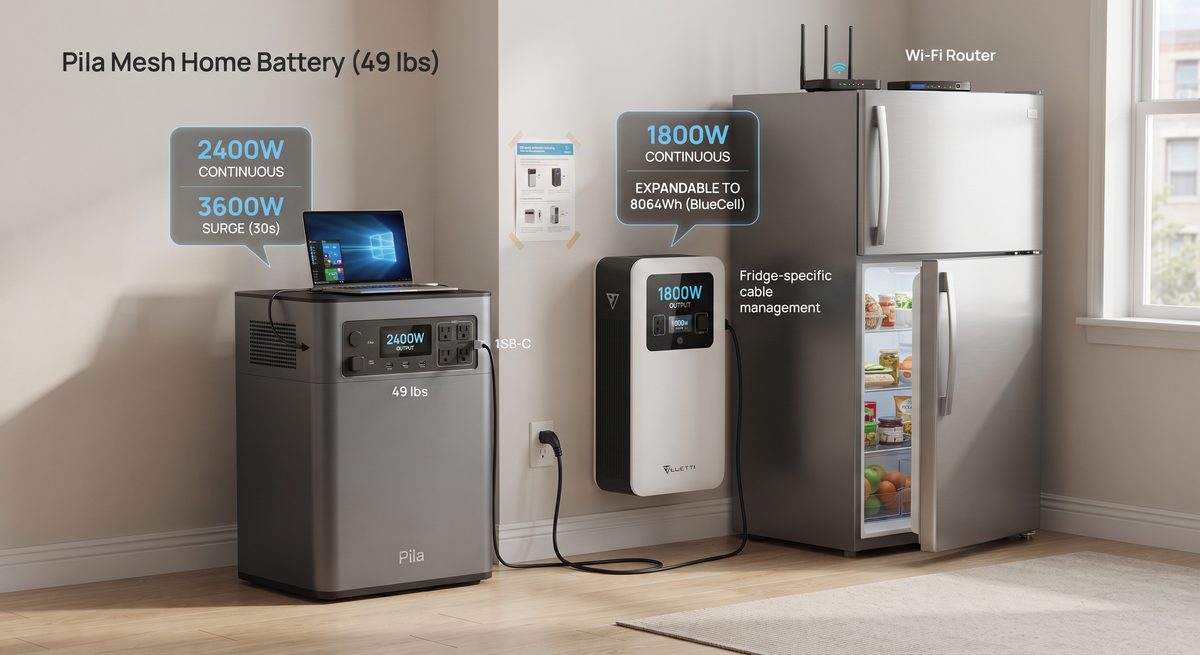
Pila Mesh vs Bluetti FridgePower: Which Plug-In Apartment Backup Is Better for a Refrigerator?
Apartment buyers often compare battery capacity first, but refrigerator backup can fail on a more basic issue: whether the unit can handle the compressor's startup demand from the outlet where the fridge actually sits. This head-to-head comparison separates Pila Mesh's higher power output and mesh-style apartment fit from Bluetti FridgePower's larger capacity range and fridge-oriented design.
Read guide
How Big a Home Backup Battery Do You Actually Need for an Outage?
Skip the marketing math. Size a plug-in home backup battery around what you need to keep running — measured in days, not hours — and why surge rating matters more than the number on the box.
Read guide