Can One Backup Battery Run a Sump Pump and Furnace Blower? Startup Watt Math and Circuit Choices
For a sump pump and furnace blower, the decisive specification is often not the battery’s advertised kWh. A pump can demand a sharp startup surge while the furnace needs a usable circuit and enough uninterrupted power to complete its sequence. This guide turns those constraints into a realistic sizing and installation decision.
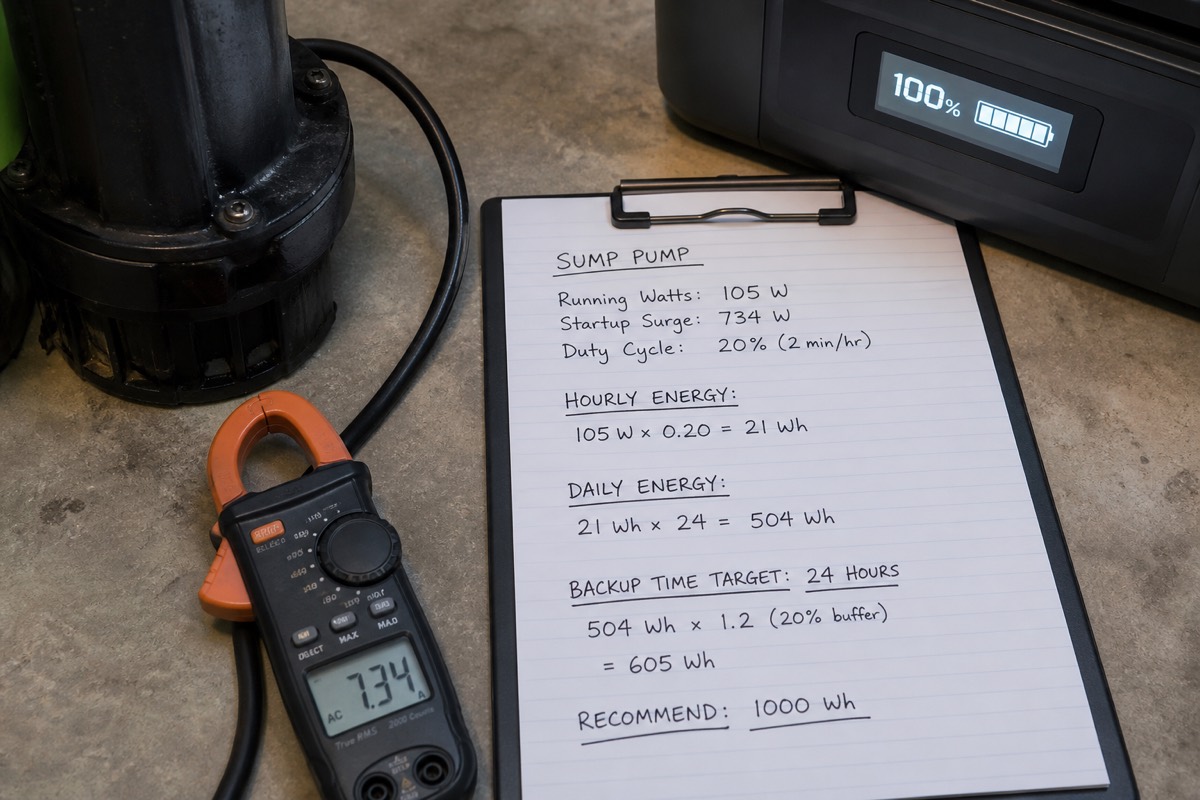
A backup battery for a sump pump and furnace blower must clear two different hurdles. The inverter has to start the pump without tripping, and the battery must store enough energy to cycle both loads through a multi-hour or overnight outage.
Circuit access matters just as much. A corded 120V pump may be easy to connect, while a hardwired furnace or 240V pump usually requires a professionally installed selected-circuit transfer solution. This guide is the sizing and circuit checklist. For product recommendations after you know your numbers, use the best home backup batteries for sump pumps and furnaces.
Sizing
Size your home backup
Enter the pump, furnace, fridge, and communications loads in GridMatch’s sizing wizard, then use the runtime calculator to compare the battery size you need with the inverter surge and circuit path your equipment actually requires.
Free · No signup · Days, not hours
Quick take
- Check the pump's voltage and startup requirement before shopping; running watts alone do not size the inverter.
- Calculate energy from actual duty cycles, then add 10–15% for AC inverter losses plus reserve for idle draw and changing weather.
- A plug-in station is realistic for a corded 120V sump pump, but it cannot safely power a hardwired furnace circuit by itself.
- Native 240V output is necessary if the pump is 240V, but the unit still needs appropriate transfer equipment and professional installation.
- More battery capacity extends runtime; it does not fix insufficient surge output or inaccessible circuits.
Sizing a backup battery for a sump pump and furnace blower
Start with three numbers for each load:
- Running power: The power consumed after the motor is operating.
- Startup demand: The brief inrush required to start the pump or blower motor.
- Duty cycle: The percentage of time the equipment runs during the outage.
Do not assume the pump runs continuously. If it draws 900W while operating and runs for 15 minutes each hour, its hourly energy use is:
900W × 0.25 hour = 225Wh per hour
Over an eight-hour outage:
225Wh × 8 = 1,800Wh, or 1.8 kWh
Now add the furnace. In an illustrative example, a furnace drawing 600W at a 50% duty cycle uses:
600W × 0.5 × 8 hours = 2,400Wh, or 2.4 kWh
A 15W router running for the full eight hours adds:
15W × 8 hours = 120Wh, or 0.12 kWh
That produces an estimated AC load of:
1.8 kWh + 2.4 kWh + 0.12 kWh = 4.32 kWh
Chart
Chart unavailable
Because AC inverters typically lose about 10–15% during conversion, divide the AC requirement by 0.90 to 0.85:
4.32 kWh ÷ 0.90 = 4.8 kWh
4.32 kWh ÷ 0.85 = 5.08 kWh
Chart
Chart unavailable
Under those assumptions, the system needs roughly 4.8–5.08 kWh of nominal battery capacity before allowing additional reserve for inverter idle draw, repeated motor starts, colder weather, or more frequent pump cycling. The example is not a substitute for your equipment labels and measured duty cycles. Its purpose is to show why a 3–4 kWh base battery can get tight during an overnight outage even when its inverter has plenty of wattage.
The common sizing error is adding nameplate watts and multiplying by outage hours as though both motors run continuously. That overstates some loads while completely missing startup surge.
Chart
Chart unavailable
Pump startup is an inverter problem, not a kWh problem
A pump's label wattage does not necessarily tell you what it demands during startup. Motor inrush can be substantially higher than running power, and the exact requirement depends on the pump, motor design, head pressure, and condition of the equipment.
Chart
Chart unavailable
For inverter sizing, consider the worst realistic overlap:
Pump startup demand + furnace running demand + other active loads
If the furnace blower, fridge, or another motor is already running when the sump pump starts, the inverter must support that combined event. An inverter rated above the total running load can still shut down if the pump's inrush exceeds its surge capability.
Use a manufacturer-provided startup rating or an inrush-capable clamp meter where possible. Do not estimate startup watts from the breaker size alone. Breakers and wiring describe circuit limits, not precise operating demand.
Soft-start equipment may reduce startup demand for compatible motors, but compatibility must be confirmed for the specific pump or blower. It should not be treated as a universal fix. A failing or partially jammed pump can also draw differently from a healthy one, so battery sizing should not replace equipment maintenance.
UPS switchover is another separate issue. A 10 ms or 20 ms UPS rating describes how quickly a compatible connection changes from utility power to battery. It does not guarantee that every furnace control board will continue without resetting, and it does not increase motor-starting output. A sump pump generally cares more about available surge, while furnace electronics may care about both transfer behavior and proper circuit wiring.
Circuit access decides whether plug-in backup is realistic
A corded 120V sump pump can often connect directly to a suitable battery output, provided the inverter supports its measured startup demand. Keep connections dry, follow the pump manufacturer's requirements, and avoid undersized extension cords that create voltage drop during startup.
The furnace is usually more complicated. A gas furnace may have modest electrical consumption, but the backup source must support its full operating sequence, including controls, inducer, ignition, and blower. Powering only the blower is generally not the goal.
Most furnaces are hardwired. A portable battery cannot safely energize that branch circuit through an ordinary wall outlet, and a homemade backfeed cord is dangerous. An electrician can install an approved furnace transfer device or selected-circuit transfer switch that isolates utility power before connecting the backup source. The electrician should also verify neutral and grounding requirements for the battery and furnace controls.
A 240V sump pump creates a similar constraint. Native 240V output is only the first requirement. You still need compatible connection and transfer equipment, normally installed by a professional. A 120V-only station cannot run a 240V pump from one unit.
This is the dividing line marketing materials often omit: a plug-in battery can power accessible corded loads, but it cannot become a safe whole-panel or hardwired backup system without transfer hardware. Even batteries advertised for “whole-home” use are limited by inverter output, stored energy, circuit selection, and installation.
Turn the math into a buying checklist
Once the watt math and circuit path are clear, shopping gets simpler. Write down four constraints before comparing products:
| Constraint | What to record |
|---|---|
| Surge | Pump startup demand + any overlapping motor loads |
| Continuous output | Combined running watts of pump, furnace sequence, and other active loads |
| Capacity | Derated overnight or multi-day kWh target |
| Circuit path | Corded 120V plug-in, hardwired furnace transfer, or native 240V with transfer hardware |
Then match those constraints to systems in the critical-load backup roundup. That article covers the buyer roles — strong single-unit surge, manual transfer value, automatic selected-circuit transfer, higher expansion, and installed wall batteries — without repeating the sizing walkthrough here.
For a corded 120V sump pump and a furnace that already has an approved transfer connection, a plug-in system may be enough. Confirm four points before buying:
- The pump's measured or documented startup demand fits within the inverter's surge rating.
- The combined running load fits within continuous output.
- The battery has enough derated AC energy for the expected duty cycles.
- The furnace connection safely isolates the utility supply.
Choose a native-240V expandable system when the pump is 240V, when selected panel circuits need backup, or when capacity must grow beyond one night. Plan on professional transfer-switch installation rather than assuming a 240V receptacle alone solves circuit access.
Automatic transfer is valuable in unattended outages, especially when basement flooding is the main risk. Manual transfer can still work for occupied homes, but it leaves a gap until someone operates the switch. The furnace will also need to restart its sequence after a manual transfer.
Finally, budget energy for anything added later. A fridge, freezer, router, lighting, and inverter idle draw all reduce sump-and-furnace runtime. Measure or estimate each load separately instead of applying a vague “whole-home” label. Most homeowners find that a carefully chosen critical-load panel is more predictable than trying to support every circuit.
FAQ
Can one battery run the sump pump and furnace at the same time?
It can if the inverter supports both the combined continuous load and the pump's startup demand while the furnace is operating. Capacity then determines how long the system can sustain their duty cycles. Check surge and circuit access before comparing kWh.
How many kWh are needed for an overnight outage?
Multiply each load's running watts by its expected operating hours, add the results, and divide by 0.90 to 0.85 for AC inverter losses. The illustrative eight-hour example in this guide requires about 4.8–5.08 kWh of nominal capacity before reserve, but actual pump cycling and furnace runtime can change that number substantially.
Can I plug a hardwired gas furnace directly into a power station?
Not without an approved connection method. Most hardwired furnaces require a professionally installed transfer device or selected-circuit transfer switch that isolates utility power. Do not backfeed the furnace through a wall outlet or improvised cord.
Do I need a 240V battery system for a sump pump?
Only if the pump is rated for 240V. Check its nameplate and circuit before choosing a system. A native-240V battery still needs compatible connection hardware, and panel or transfer-switch work should be handled by a qualified electrician.
Does a UPS rating guarantee the furnace stays on?
No. A 10 ms or 20 ms UPS specification describes transfer speed for a compatible connection, but furnace control boards vary. Wiring, grounding, transfer hardware, and the furnace's restart behavior all matter. UPS speed also does not help an inverter that lacks enough surge output to start the pump.
Takeaway
The right backup battery for a sump pump and furnace blower starts with pump inrush, furnace circuit access, and duty-cycle math. Use a smaller 120V plug-in option only for accessible loads with verified surge requirements; step up to an expandable native-240V or selected-circuit system for hardwired equipment, 240V pumps, automatic transfer, or longer outages. Size first here, then compare systems in the product roundup. The mistake to avoid is buying extra kWh while ignoring whether the inverter can start the pump or safely reach the furnace circuit.
Related guides
These guides cover adjacent buying scenarios worth comparing.
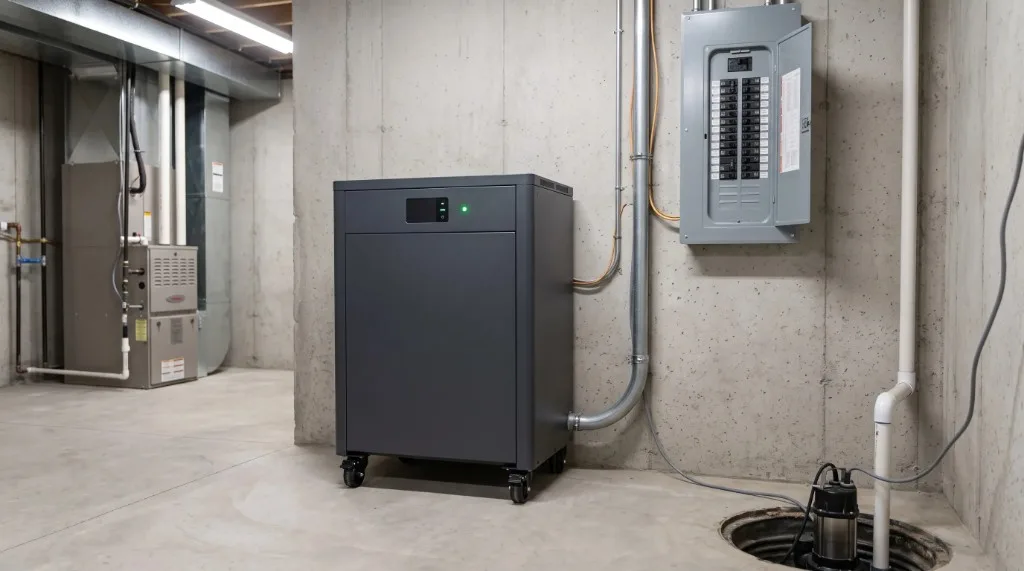
Best Home Backup Batteries for Sump Pumps and Furnaces
Critical-load backup is not about buying the biggest battery you can afford. The real mistake is ignoring startup surge, hardwired circuits, and whether your backup path can actually feed the panel circuits that matter. A smaller, well-matched system beats a larger battery if it handles the sump pump, furnace blower, and transfer setup correctly.
Read guide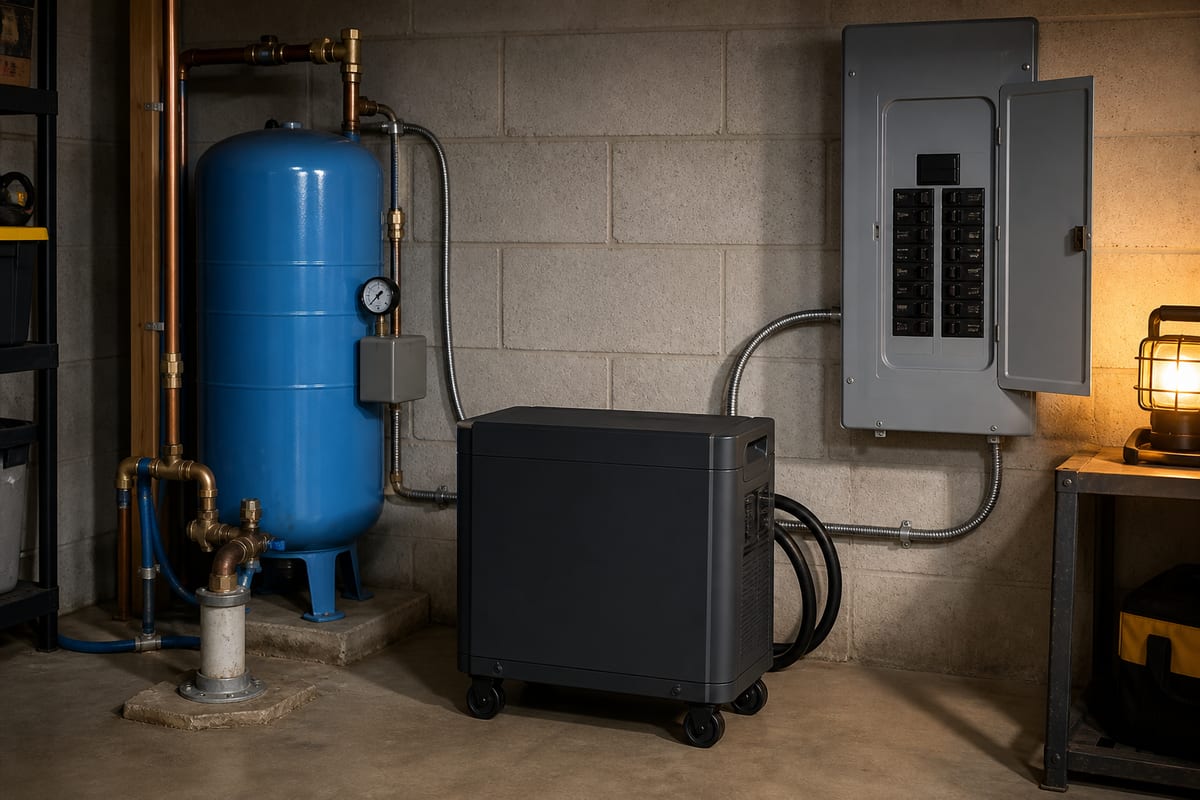
Can a Home Backup Battery Run a 240V Well Pump?
A large wattage number on a battery does not prove it can run a well pump. The system must produce true 120/240V split-phase power, start the pump motor, and connect through approved transfer equipment that cannot backfeed the utility.
Read guide