Can a Home Backup Battery Run a 240V Well Pump?
A large wattage number on a battery does not prove it can run a well pump. The system must produce true 120/240V split-phase power, start the pump motor, and connect through approved transfer equipment that cannot backfeed the utility.
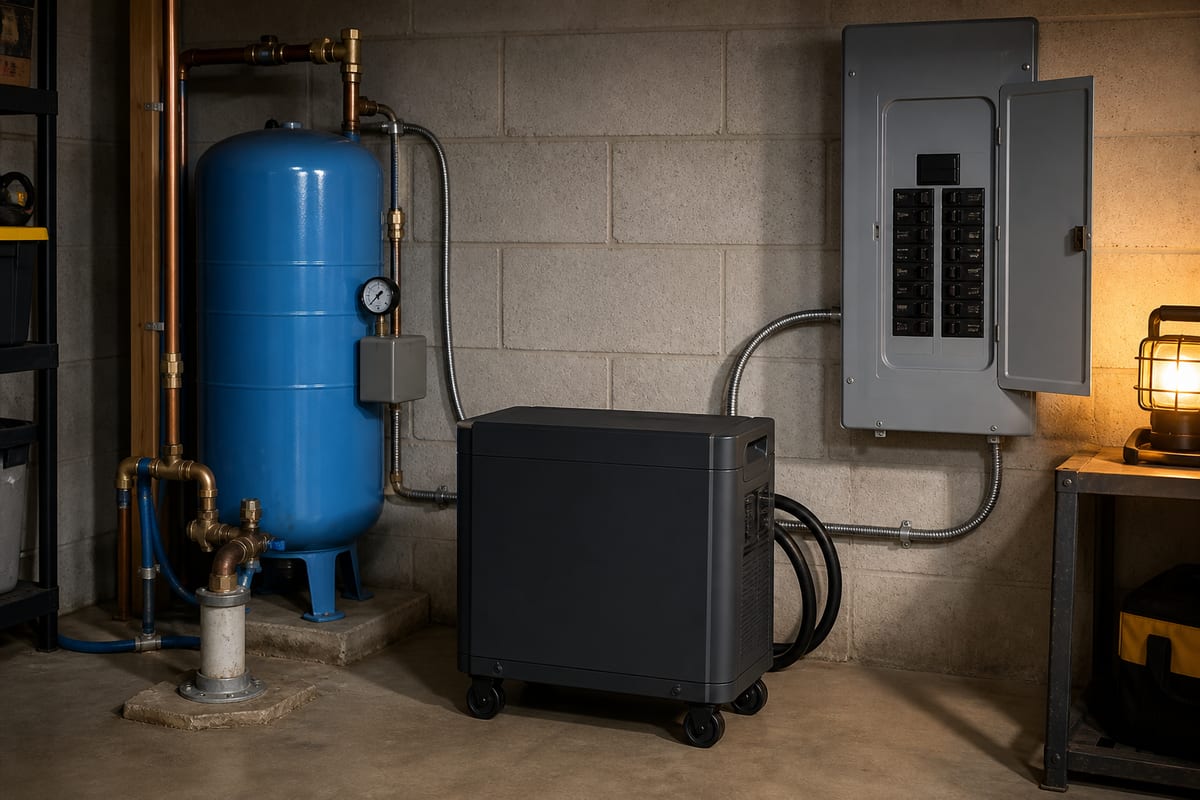
A home backup battery can run a 240V well pump, but only when three conditions are met: the system produces true 120/240V split-phase power, it can start the pump motor, and it connects to the house through approved transfer or isolation equipment.
Continuous wattage alone does not prove compatibility. A battery may run the pump after it starts and still shut down when the motor first kicks on. Another system may start it easily and still lack enough stored energy to keep the refrigerator, pressure system, lights, and heating controls running through a long outage.
This guide covers US-style 120/240V split-phase electrical service. Homes in other countries may use a different 230V or 240V supply and need different equipment. For motor-start math on 120V pumps and furnace blowers, see backup battery sizing for a sump pump and furnace blower. For a broader critical-load shortlist, see best home backup batteries for sump pumps and furnaces.
Sizing
Size your home backup
Use GridMatch’s sizing wizard to enter your pump and critical-load details, then compare 240V-capable systems with enough startup headroom and a realistic connection path for your home.
Free · No signup · Days, not hours
Quick take
- Start with the pump: record voltage, running current, and locked-rotor or measured startup current before choosing a battery.
- Confirm true split-phase output. Two ordinary 120V outlets do not automatically create a usable 240V supply.
- Treat surge ratings as a screening tool. Duration and inverter behavior matter, not only the largest number on the product page.
- Plan a safe connection. A hardwired pump normally needs a transfer switch, an approved interlock and inlet, or a backup panel installed as local code allows.
- Size energy separately. Starting the pump is a power problem. Running the house through an outage is an energy problem measured in kWh.
Start with the pump, not the battery
A well pump may run for only a few minutes at a time, but the motor can draw much more current while starting. That brief demand is often the hardest part of running it from a battery inverter.
The pressure switch can call for water while a refrigerator, freezer, furnace blower, or another motor is already running. The backup system therefore needs to support the pump’s startup demand plus the loads that are already online.
Begin by checking the pump nameplate, control box, installation manual, or electrical records for:
- Rated voltage
- Running or full-load current
- Locked-rotor amps, starting amps, or published generator-sizing information
- Motor horsepower
- Two-wire or three-wire motor design
- Separate control-box requirements
- Other circuits that must remain powered
If startup information is unavailable, an electrician can measure inrush with a suitable meter. That is normally more useful than estimating from horsepower alone.
A soft starter or variable-frequency drive can reduce starting demand in some systems, but compatibility depends on the motor and its controls. Do not add one to a submersible pump unless the pump or control manufacturer supports the arrangement.
Confirm true 120/240V split-phase output
A typical US 240V well pump receives line-to-line voltage from the two hot legs of a split-phase service. Two unrelated 120V batteries or receptacles cannot simply be combined to create this supply.
Look for an explicit 120/240V split-phase specification and an appropriate output connection, such as an L14-30 or another manufacturer-approved home-backup port. Some systems provide native split-phase from one inverter. Others require two units and a dedicated hub.
The system must also deliver its advertised surge in the configuration you intend to use. A surge figure available from a 120V receptacle does not necessarily prove that the same starting support is available through the 240V connection.
Estimate the pump’s electrical demand
For a rough screen:
Running apparent power
Rated voltage × running amps = running VA
Starting apparent power
Rated voltage × locked-rotor amps = starting VA
For example, a pump with 30A of locked-rotor current at 240V represents about 7,200 VA during startup. If that same pump runs at 10A, the running demand is about 2,400 VA.
Chart
Chart unavailable
That does not automatically mean any battery advertised with a 7,200W surge rating will start it. VA and watts are not identical for a motor, voltage may dip during startup, and manufacturers use different surge durations and shutdown rules.
The safest process is to compare the pump’s LRA or measured inrush with any motor-start rating published by the battery manufacturer. If the battery company publishes only surge watts, leave additional margin and ask it to confirm compatibility with the pump’s voltage and startup current.
Also add the power already being used when the pump starts. A 7,200W surge inverter has much less pump headroom if 1,500W of refrigeration, lighting, and heating equipment is already running.
Calculate runtime from energy use
Once the battery can start the pump, estimate how long it can support the outage plan.
Pump energy in Wh
Measured running watts × total running hours
For an intermittent pump
Total running hours = number of cycles × minutes per cycle ÷ 60
Then add the daily energy used by the refrigerator, freezer, Wi-Fi equipment, lights, furnace controls, water treatment equipment, and any other selected circuits.
Daily energy demand
Pump kWh per day + other critical-load kWh per day = total daily kWh
Do not assume the full nameplate capacity will reach the loads. Inverter losses, standby consumption, temperature, battery protection reserves, wiring, and load level all affect the result. GridMatch planning usually reserves about 10–15% for inverter conversion, then adds extra reserve for idle draw and temperature. Treating every rated watt-hour as usable AC energy is the optimistic mistake.
A pressure tank also affects how frequently the pump starts. Larger or properly charged tanks can reduce cycling, but actual water use still determines the total energy consumed.
Compare the systems on the same basis
The important distinction is between the capacity of one inverter stack and the much larger maximum advertised for a multi-inverter system.
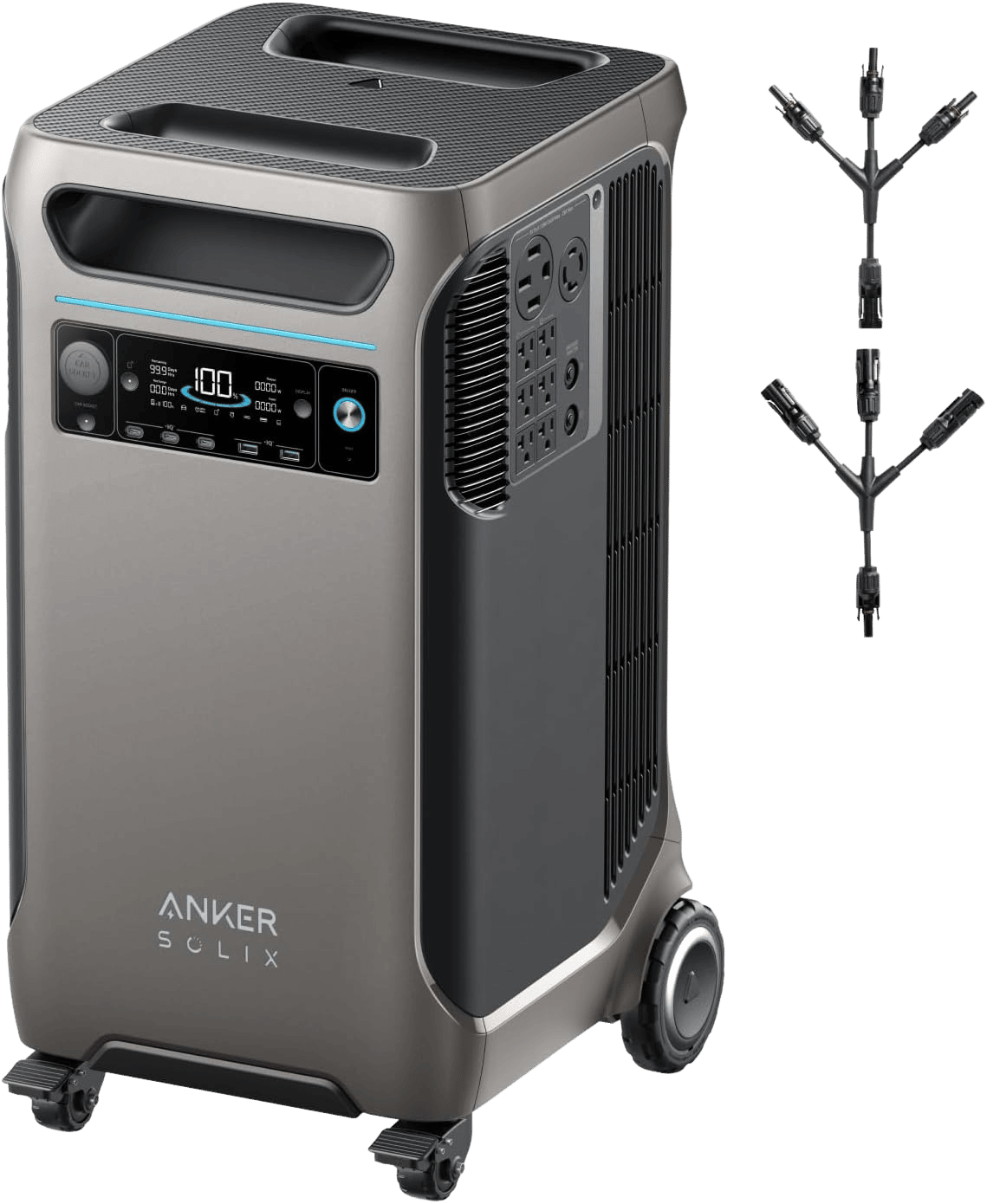
- Anker SOLIX F3800: 3.84 kWh base capacity, 6,000W continuous output, and 9,000W surge. One F3800 supports up to six expansion batteries for 26.9 kWh. The advertised 53.8 kWh maximum uses two F3800 units.
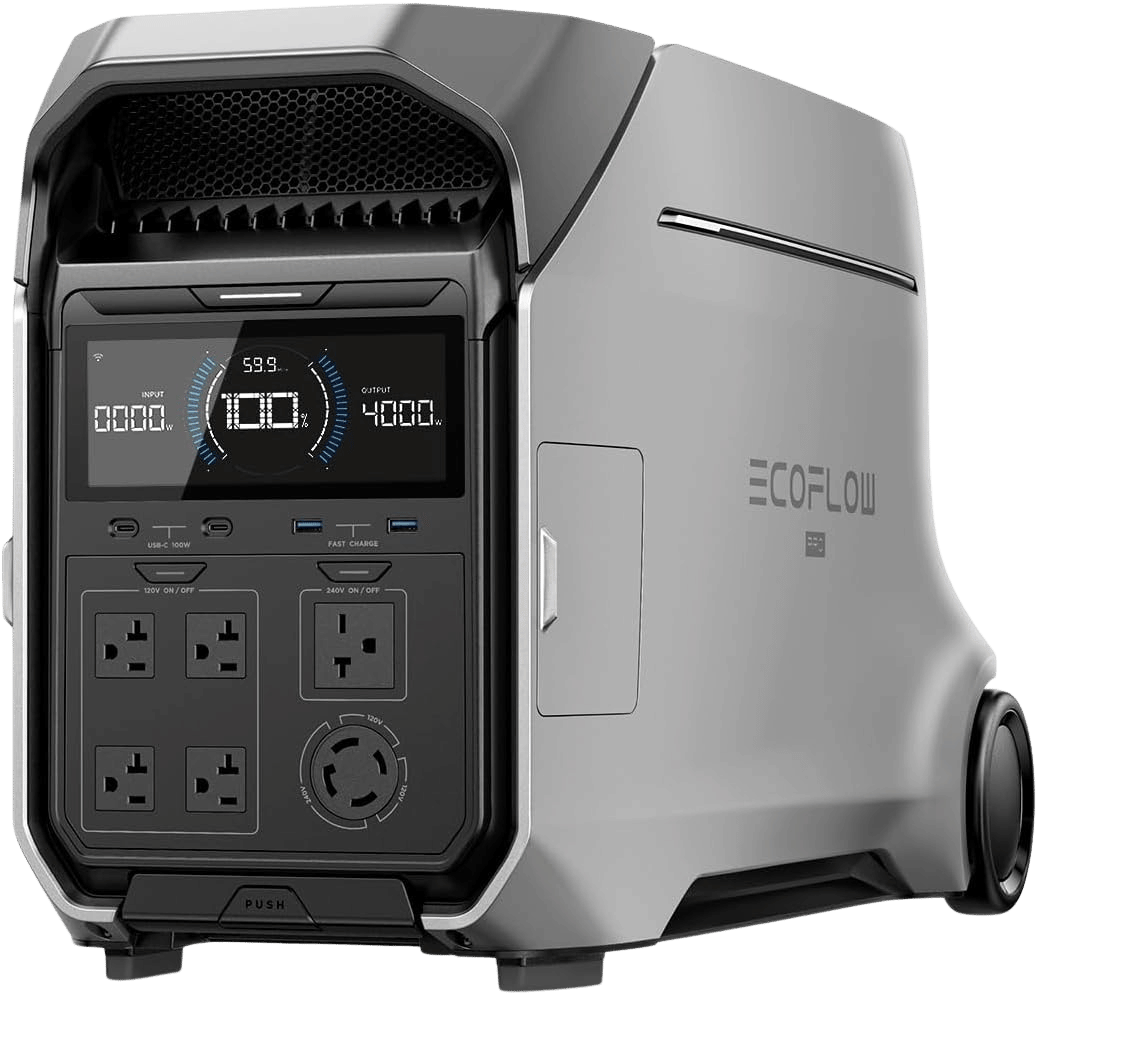
- EcoFlow DELTA Pro 3: 4.096 kWh base capacity, 4,000W continuous output, and 8,000W surge. One unit expands to about 12 kWh.
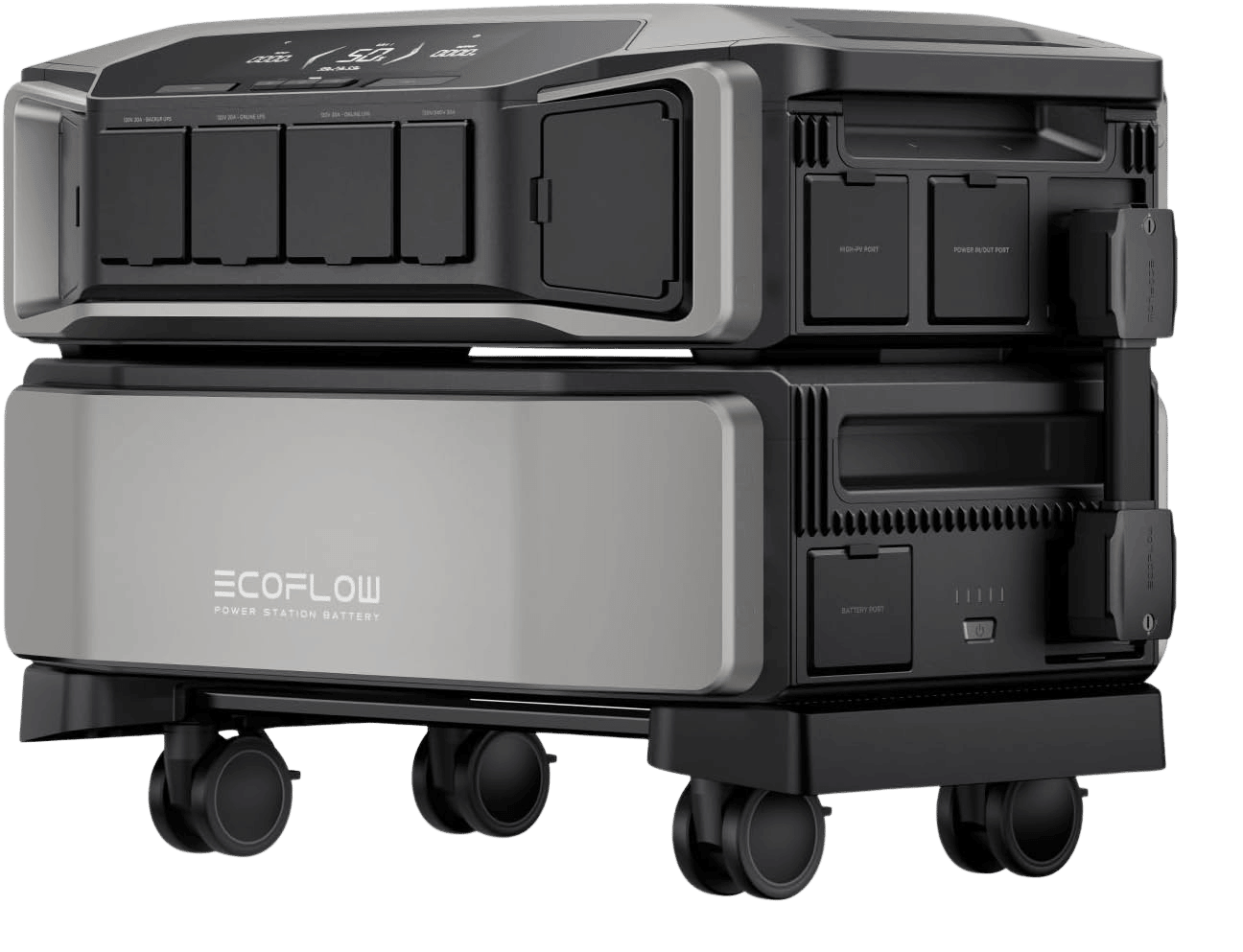
- EcoFlow DELTA Pro Ultra: 6.144 kWh base capacity, 7,200W continuous output, and 10,800W surge. One inverter supports up to five batteries for about 30 kWh. The 90 kWh maximum requires three inverters and 15 batteries.
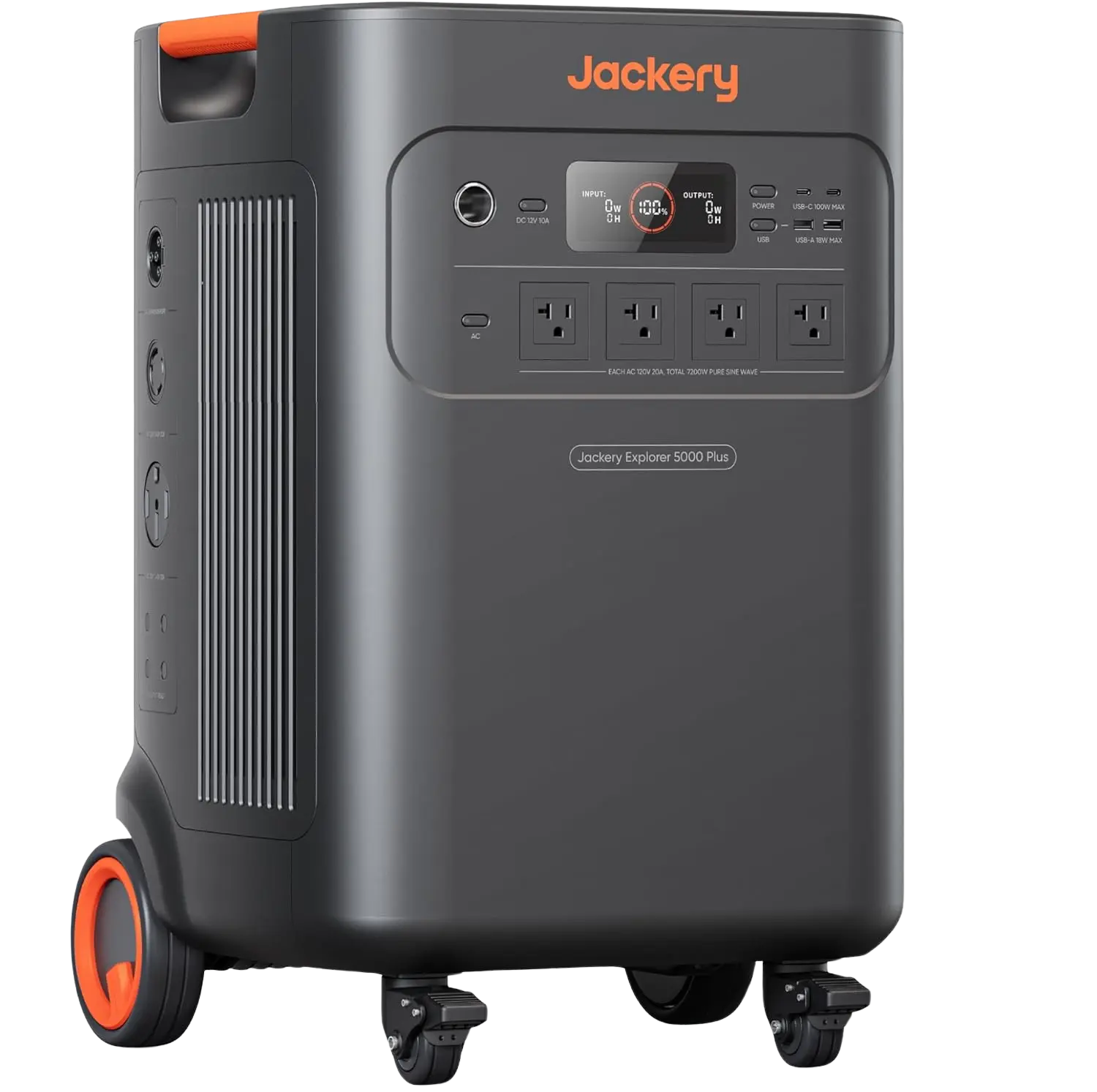
- Jackery Explorer 5000 Plus: 5.04 kWh base capacity, 7,200W continuous output, and 14,400W surge. One unit supports up to five expansion batteries for about 30 kWh. The 60 kWh maximum requires two main units and ten expansion batteries.
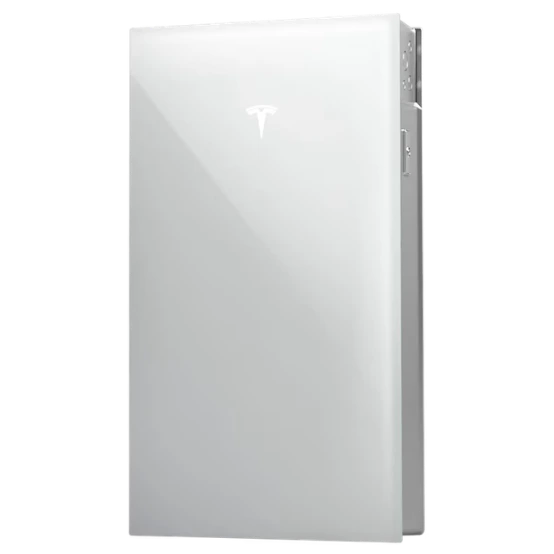
- Tesla Powerwall 3: 13.5 kWh of energy capacity and up to 11.5 kW of continuous output. Tesla publishes a separate motor-start capability of 185A LRA rather than a conventional higher surge-watt figure. One Powerwall 3 can add three 13.5 kWh Expansion units for 54 kWh total, but those battery-only expansions do not increase inverter output.
Chart
Chart unavailable
Chart
Chart unavailable
Prices are approximate.
Some links may be affiliate links. GridMatch may earn a commission if you buy through them, at no extra cost to you.
These numbers narrow the options, but they do not confirm that a particular pump will start. The final check must use the pump’s electrical data and the exact system configuration.
Connect the pump circuit safely
Never try to energize a house through a dryer outlet, ordinary wall receptacle, or improvised male-to-male cord. That can backfeed the utility connection and expose workers, neighbors, and equipment to dangerous voltage.
Common approved approaches include:
- A manual transfer switch connected to selected circuits
- A smart backup or critical-load panel with automatic transfer
- A listed main-panel interlock and power inlet, where local code and the equipment manufacturer permit it
- Permanently installed isolation equipment supplied with a whole-home battery system
The equipment must prevent utility power and backup power from feeding the circuit at the same time.
A qualified electrician should verify breaker size, conductor size, neutral and grounding behavior, overcurrent protection, connection type, pump controls, permits, and compatibility with local electrical rules.
Fast transfer time is useful for computers, networking equipment, and electronic controls, but it does not help an inverter start a motor that exceeds its electrical limits.
How the leading systems fit a well-pump backup plan
Anker SOLIX F3800
Role: Best flexible manual-transfer option. The Anker SOLIX F3800 is a strong choice when you want native 120/240V output and more starting headroom than smaller mobile systems provide.
It produces 6,000W continuously with a 9,000W surge rating. One unit starts at 3.84 kWh and expands to 26.9 kWh. Anker sells it with a 120/240V manual transfer-switch option, while its Home Power Panel provides a more integrated automatic setup.
The F3800 is most convincing when the pump’s measured startup demand fits comfortably below its surge limit and the homeowner wants equipment that can still be moved. At 132.3 pounds, however, “portable” mainly means that it has wheels. Its base capacity may also be too small for a multi-day outage unless additional batteries or recharging are available.
Anker SOLIX F3800
3 configurations
3.84–26.9 kWh LFP, 6000 W, native 240V, expandable home backup.
Jackery Explorer 5000 Plus
Role: Best portable surge specification. The Jackery Explorer 5000 Plus has the strongest published surge number among these mobile single-inverter systems.
It supplies 7,200W continuously and up to 14,400W of surge, with native 120/240V output. Its 5.04 kWh base capacity expands to roughly 30 kWh around one main unit.
Jackery’s Smart Transfer Switch supports up to 12 120V circuits or 6 240V circuits, and mixed 120V/240V layouts are also possible. That makes it suitable for a pump and selected household loads without trying to back up every circuit.
The main caution is that a 14,400W headline still does not guarantee compatibility with every motor. Confirm the available surge duration and the pump’s measured inrush. The advertised 60 kWh capacity also belongs to a two-unit system, not one Explorer 5000 Plus.
Jackery Explorer 5000 Plus
2 configurations
5.04–60 kWh LFP, 7200 W, 240V, STS selected-circuit automatic transfer (12×120V / 6×240V).
EcoFlow DELTA Pro Ultra
Role: Best modular system for a larger backup plan. The EcoFlow DELTA Pro Ultra fits homes where the well pump is one part of a broader backup plan that may include refrigeration, heating controls, lighting, and other large loads.
One inverter produces 7,200W continuously with a 10,800W surge rating. It starts with one 6.144 kWh battery and supports five batteries for about 30 kWh around that inverter.
EcoFlow’s Smart Home Panel 2 adds automatic transfer and control for up to 12 circuits. Larger DPU systems can use multiple inverters. EcoFlow also sells a 32-circuit Smart Home Panel 3 for larger installed systems; that panel is a separate whole-home path, not the capability of the basic inverter-and-battery package.
The important limitation is scale. EcoFlow’s 90 kWh and 21.6 kW figures require three inverters and 15 batteries. That is a large installed system, not the capability of one inverter and one battery.
EcoFlow DELTA Pro Ultra
3 configurations
6.1–90 kWh modular LFP, 7.2 kW / 240V, ~2 h recharge, SHP2 auto transfer option.
EcoFlow DELTA Pro 3
Role: Best smaller single-unit option. The EcoFlow DELTA Pro 3 makes sense when the pump has a moderate, verified startup requirement and 4,000W of continuous output is sufficient for the selected loads.
It provides native split-phase output from one unit, an 8,000W surge rating, and 4.096 kWh of base capacity. One unit expands to about 12 kWh.
EcoFlow supports connections through Smart Home Panel 2, an inlet box, or a manual transfer switch. When the unit is used directly, EcoFlow says its normal 120V receptacles switch off when 240V output mode is selected. Its L14-30 split-phase connection is the relevant output for a home-panel setup.
This is the lowest-output option in the comparison. It should therefore be selected only after checking the pump’s actual startup current, not merely because the product page says 240V.
EcoFlow DELTA Pro 3
2 configurations
4.1–12.3 kWh LFP (single-unit stack), 4000 W / 8000 W surge, true 120V/240V, ~10 ms UPS.
Tesla Powerwall 3
Role: Best permanently installed automatic option. The Tesla Powerwall 3 is the cleanest fit for someone who wants a permanently installed system that automatically isolates the home from the grid during an outage.
It provides 13.5 kWh of energy capacity and up to 11.5 kW of continuous AC output. Instead of publishing a conventional higher surge-watt figure, Tesla specifies a motor-start capability of 185A LRA. That is the figure an installer should compare with the pump and other motor loads.
Each Powerwall 3 can add up to three 13.5 kWh Expansion units, reaching 54 kWh around one inverter. Those expansions increase runtime but do not add inverter output.
Powerwall 3 weighs 287 pounds and requires professional design and installation. Tesla describes its backup transition as seamless, but it should not be presented as a guaranteed 0 ms UPS for every connected device.
Tesla Powerwall 3
13.5 kWh installed LFP wall battery, 11.5 kW, automatic whole-home backup.
FAQ
Can a home battery run a 240V well pump?
Yes, if it provides true 120/240V split-phase power, enough continuous output, and enough motor-start capability. The pump must also connect through approved equipment that isolates the home from the utility.
Can I plug a well pump directly into a portable power station?
A cord-connected pump may use a compatible 240V outlet if the pump manufacturer permits it. Most residential well pumps are hardwired, however, and must be connected through approved transfer or isolation equipment.
Do not connect a power station to an ordinary household or dryer receptacle to feed the house.
How much battery capacity does a well pump need?
That depends on the pump’s running watts, total daily runtime, and the other circuits being backed up. Multiply measured running watts by operating hours, add the other loads, and leave room for conversion losses, standby use, and reserve capacity.
Capacity determines runtime. It does not determine whether the inverter can start the pump.
Is a larger surge rating always better?
More surge headroom is useful, but ratings from different manufacturers may use different durations and testing methods. The surge must apply to the intended 240V configuration and last long enough for the motor to accelerate.
Measured startup current or manufacturer LRA data is more valuable than the battery’s headline surge number by itself.
Does adding expansion batteries increase startup power?
Usually not. Battery-only expansion packs normally increase stored energy and runtime without changing inverter output. Starting power increases only when the system supports additional inverters or another manufacturer-approved power-scaling method.
Takeaway
A 240V-capable battery can keep a private well operating during an outage, but the decision starts with the pump.
First confirm the pump’s voltage, running demand, and startup current. Then choose an inverter that produces true split-phase power with comfortable motor-start headroom. After that, size the battery capacity for the complete critical-load plan and have the connection designed around approved transfer or isolation equipment.
The biggest mistake is buying from a continuous-watt or kWh number alone. A reliable well-pump backup requires the right voltage, enough starting capability, realistic runtime, and a safe connection to the home.
Related guides
These guides cover adjacent buying scenarios worth comparing.
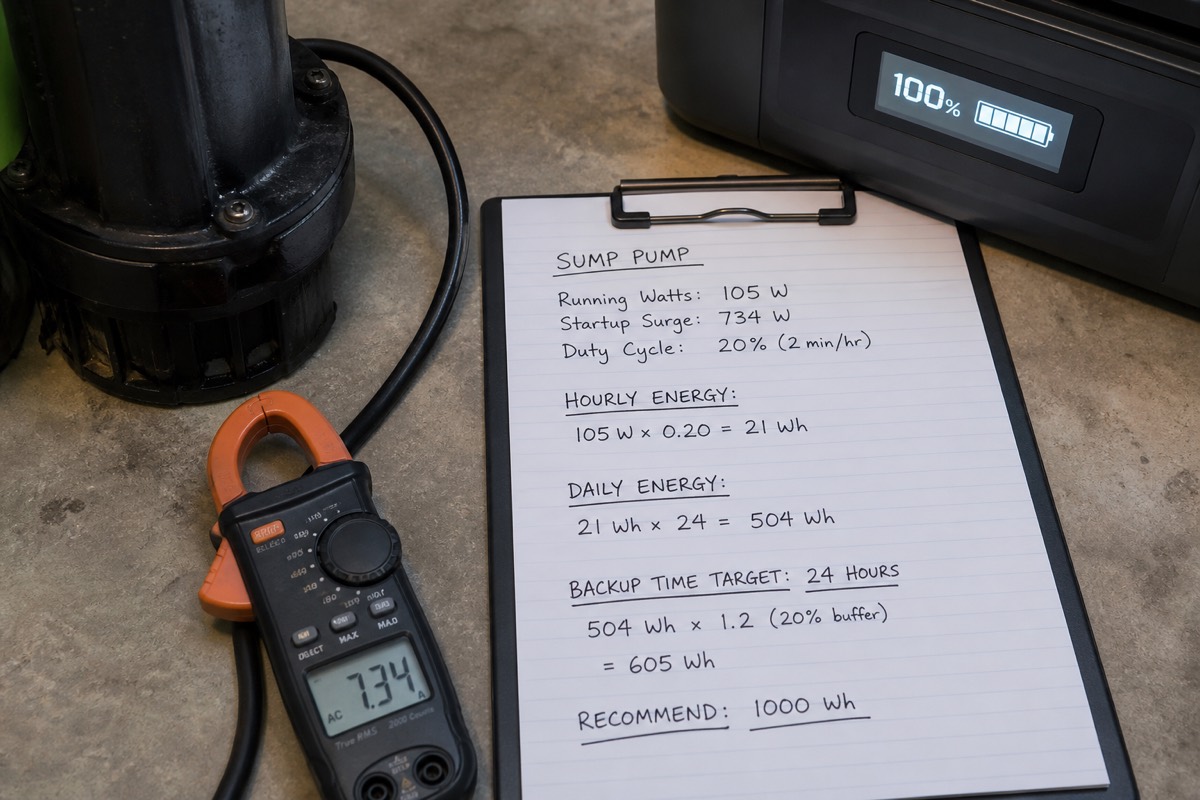
Can One Backup Battery Run a Sump Pump and Furnace Blower? Startup Watt Math and Circuit Choices
For a sump pump and furnace blower, the decisive specification is often not the battery’s advertised kWh. A pump can demand a sharp startup surge while the furnace needs a usable circuit and enough uninterrupted power to complete its sequence. This guide turns those constraints into a realistic sizing and installation decision.
Read guide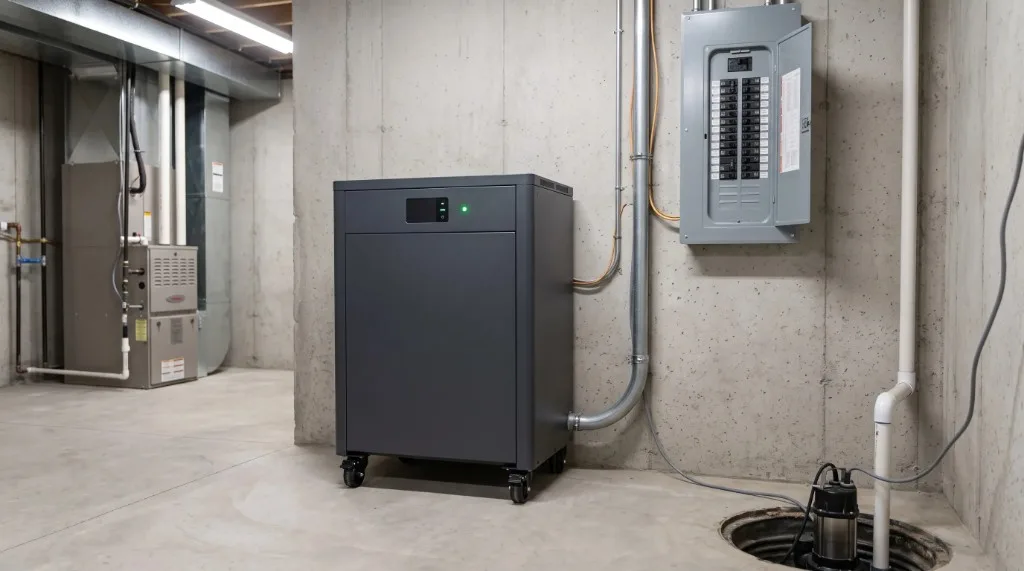
Best Home Backup Batteries for Sump Pumps and Furnaces
Critical-load backup is not about buying the biggest battery you can afford. The real mistake is ignoring startup surge, hardwired circuits, and whether your backup path can actually feed the panel circuits that matter. A smaller, well-matched system beats a larger battery if it handles the sump pump, furnace blower, and transfer setup correctly.
Read guide